Our entries for January theme is somewhat scarce. However, I hope this month is a bit merrier, because instead of reading translations of old Greek and Latin, we (at least most of us) will be reading English plays in English without the distorting veil of translation.
Renaissance was a big movement that influenced all Europe, almost in every aspect of its culture. In England, however, when we talk of Renaissance, we talk about literature. Renaissance England was the time when people were in love with poetry, and poetry and plays flourished like flowers in spring. Spencer, Bacon, Thomas Wyatt, just to name the few. Just lovely.
But we're going to focus on plays.
William Shakespeare. No other playwright of the period - or of all periods - can match him in fame and glory. I expect many of us to find joy and pleasure in reading his plays. But he's not the only one. Just a few steps behind him is Marlowe. He doesn't get as much attention, not because the quality of his plays is somewhat lower than Shakespeare, but just because he died too fast. We only have the privilege to read some of his plays, such as Dido and Aeneas and The Jew of Malta. Other playwrights to consider are Ben Johnson, George Chapman, etc.
Although I mention mainly the English playwrights, it would be amazing to have other plays from all around the world. Don't be afraid to improvise.
Please share your reading moment with us in the inlinkz below. Enjoy the play(s).
Thursday, 29 January 2015

Wednesday, 28 January 2015
Thesmophoriazusae: Introduction to Greek Sense of Humour
Euripides made me read this.
Having read some really gruesome Greek tragedies, I decided that I had to acquaintance myself with Greek comedy, so I browsed Wikipedia for advice. Lysisastra was my first option (a friend recommended it for me), however, upon reading the synopsis, I decided that I wouldn't like it. Then I read the plot of Thesmophoriazusae, in which it makes a parody of Euripides. That definitely made me read.
****
Thesmophoriazusae starts with Euripides and his friend (in-law, actually), Mnesilochus, discussed the chance of Euripides being killed by women. The women were offended by Euripides' portrayal of their sex in his plays. So in Thesmophoria, a fertility festival for Demeter, they plan to discuss how to revenge him.
At first, Euripides sought the help of Agathon, a fellow playwright who cross-dresses as a woman. However, he refused. So Euripides dressed Mnesilochus instead as a woman and sent him to Thesmophorion to save his life.
In Thesmophorion, the women had a sort-of democratic debate about Euripides. Mnesilochus tried to defend Euripides by asserting that Euripides had justly portrayed women as such, as he himself (dressed as a woman) had done acts even more terrible than what Euripides told in his plays.
But his disguise was discovered. He was captured and he awaited his punishment. Euripides panicked. In some foolish attempts to save Mnesilochus he played Perseus/Andromeda and Menelaus/Helen (Mnesilochus always played the girl, by the way).
At last, Euripides plead to the women, promising them he wouldn't portray them the way he had before in his plays. They didn't agree to save Mnesilochus, but he let him tried to do so.
With a trick, he freed Mnesilochus from a Scythian Archer who was ordered to kill him.
***
All in all, it's so Greek to me. As I said before, it's my first Greek Comedy.
The comic elements of the play - crossdressing, homosexuality and jokes about homosexuality, parody of well-known plays - remind me that humanity hasn't really change since Aristophanes' time.
Although I was not really amused by this particular play, I put some Greek plays on my to-read list. One of them is Ipheginea at Tauris, which I will read when I have time. Or in April. Depends.
How was your first month in PLAY ON!? Have you been enjoying your play? Please share here.
Having read some really gruesome Greek tragedies, I decided that I had to acquaintance myself with Greek comedy, so I browsed Wikipedia for advice. Lysisastra was my first option (a friend recommended it for me), however, upon reading the synopsis, I decided that I wouldn't like it. Then I read the plot of Thesmophoriazusae, in which it makes a parody of Euripides. That definitely made me read.
****
Thesmophoriazusae starts with Euripides and his friend (in-law, actually), Mnesilochus, discussed the chance of Euripides being killed by women. The women were offended by Euripides' portrayal of their sex in his plays. So in Thesmophoria, a fertility festival for Demeter, they plan to discuss how to revenge him.
At first, Euripides sought the help of Agathon, a fellow playwright who cross-dresses as a woman. However, he refused. So Euripides dressed Mnesilochus instead as a woman and sent him to Thesmophorion to save his life.
In Thesmophorion, the women had a sort-of democratic debate about Euripides. Mnesilochus tried to defend Euripides by asserting that Euripides had justly portrayed women as such, as he himself (dressed as a woman) had done acts even more terrible than what Euripides told in his plays.
But his disguise was discovered. He was captured and he awaited his punishment. Euripides panicked. In some foolish attempts to save Mnesilochus he played Perseus/Andromeda and Menelaus/Helen (Mnesilochus always played the girl, by the way).
At last, Euripides plead to the women, promising them he wouldn't portray them the way he had before in his plays. They didn't agree to save Mnesilochus, but he let him tried to do so.
With a trick, he freed Mnesilochus from a Scythian Archer who was ordered to kill him.
***
All in all, it's so Greek to me. As I said before, it's my first Greek Comedy.
The comic elements of the play - crossdressing, homosexuality and jokes about homosexuality, parody of well-known plays - remind me that humanity hasn't really change since Aristophanes' time.
Although I was not really amused by this particular play, I put some Greek plays on my to-read list. One of them is Ipheginea at Tauris, which I will read when I have time. Or in April. Depends.
How was your first month in PLAY ON!? Have you been enjoying your play? Please share here.
Wednesday, 31 December 2014
PLAY ON! January - Ancient Plays
January is approaching. It's time to start our play reading challenge. The challenge for January is Ancient Plays.
When we say Ancient, it means anything before the printing press begun. So, Old Greeks and Romans are very welcome. Apart from those two obvious categories, if you happen to know Ancient plays from other parts of the world (Chinese or Japanese, for instance) they are welcome as well, provided they are written for plays, not epic or narrative poems.
The Greek loved to write trilogies. It was long before The Lord of the Rings or Hunger Games, but they just knew how to make a good show. So if you happen to challenge yourself with the whole 3 plays in Oresteia or Oedipus cycle, that would be awesome. Unfortunately, we don't have many nowadays, most have been lost through age and time.
I have posted a linky below for us to share with others our reviews of the plays that we read. Please insert the play author, play title, your name, and the title of your blog, with a link to your review. (e.g.: Sophocles - Oedipus Rex (Listra@Half-Filled Attic))
And, don't be shy to share your reading experience in social media, using the #PlayOn hashtag.
Let's Play!
When we say Ancient, it means anything before the printing press begun. So, Old Greeks and Romans are very welcome. Apart from those two obvious categories, if you happen to know Ancient plays from other parts of the world (Chinese or Japanese, for instance) they are welcome as well, provided they are written for plays, not epic or narrative poems.
The Greek loved to write trilogies. It was long before The Lord of the Rings or Hunger Games, but they just knew how to make a good show. So if you happen to challenge yourself with the whole 3 plays in Oresteia or Oedipus cycle, that would be awesome. Unfortunately, we don't have many nowadays, most have been lost through age and time.
I have posted a linky below for us to share with others our reviews of the plays that we read. Please insert the play author, play title, your name, and the title of your blog, with a link to your review. (e.g.: Sophocles - Oedipus Rex (Listra@Half-Filled Attic))
And, don't be shy to share your reading experience in social media, using the #PlayOn hashtag.
Let's Play!
Sunday, 28 December 2014
Henry V: The Sun Unclouded

The clergy and the nobles were pushing him to "reclaim" his title in France. Henry actually had a (weak) claim over the Kingdom of France, which was explained through a long genealogical tree. Assured that he was rightful in his claim, Henry decided to take over France.
The ambassador of France came into the court, with a mock gift from the Dauphin - heir apparent of France. This gesture was definitely meant to start a war. Henry told his people to get ready for France.
Meanwhile, Falstaff died. That's it. End of story. His friends, including Pistol and Bardolph, joined the army. They didn't really mean to fight for the king, of course, they tried to get some extras along the way, stealing from people in an already difficult situation.
The king caught 3 of his "best friends" red-handed, trying to kill him for "foreign gold". Henry was so shocked that the men he trusted could do such a thing to him. (Maybe he was never really wise in choosing friends.) The traitors executed, he departed shortly to France.
 |
| Jamie Parker as Henry. Have I told you that he's my favourite actor to play the part? |
In the night, while the French bet on the numbers of Englishmen they would kill, and debate upon horses and armours, Harry disguised himself in the night, and went around the camp to see his soldiers. He also meditated upon the nature of being king, and as the morning approached, he prayed that God might help his soldiers to be brave.
After a motivating lengthy speech (video above), and again, refusing to discuss his ransom with the herald of France, Henry and his army marched to battle. Surprisingly, they won. Henry refused any celebration, for he believed it was God who fought for him, and the credit must come to Him and Him alone.
France agreed to discuss the claim. Henry was about to be next in line for the throne of France, and he was to marry the king's daughter, Katharine. Interestingly, although Katharine was promised to him, Harry still tried to woo her all the same. It seemed that he really liked her, after all. Well, apart fromt he comedy, the scene pretty much showed that Harry was an awkward lover, which is cute, by the way.
Happy ending.
****
It doesn't sound exciting, is it? Well, the exciting parts are hardly in the main plot. The funny ones are Fluellen and Pistol, the heroic one is Henry, not in a big gesture, but in small small things that he does or says.
Henry V is a comedy, but it never ceases to make me sad. Firstly the character of Henry. He was never the stern, calm king that he tried to act throughout the play. There are moments when the "real" Henry came out, and those moments are priceless. But he was almost never alone, and when there were people, there's this feeling that he staged himself to fit into their expectation of a good king.
 |
| The king in all his glory before the Battle of Agincourt played by (the more popular) Tom Hiddleston, which I also love. |
****
Henry V is a lot of things. For one, it is an ending to a brilliant story about a boy's journey to maturity. It's also a great example of man's struggle to fulfill a role destined for him. It's about being human.
Read it, or at least, watch it. No review can do it justice. No doubt your reaction to it will very much depend upon your own life experiences, and your interpretation.
Saturday, 27 December 2014
Henry IV Part II: The Boy Grew Up

Prince Hal, whom we left in Henry IV part I as a favourable son in the eyes of his father, came back to his former life of jests and fun and revelries. Falstaff, on the other hand, remained the same - old fat drunkard enjoying every bit of his life with jokes and petty crimes. However, something changed. Hal didn't have the same closeness he had once with Falstaff. In fact, they were rarely together. Another thing, he became somewhat more aware of his reputation as a prince - or let's say, more aware of what expected from his as a prince.
There was also an interesting character - Chief Justice. He was an embodiment of rigid law, and he was unafraid to confront both Falstaff and Prince Hal. He disliked Falstaff and attributed Hal's bad conduct to his influence (which is right to some degree).
It happened that one day Falstaff was busy having fun with a prostitute named Doll Tearsheet. Unbeknownst to him, Hal and Pointz was there within, listening when he began to speak abusively about them. When confronted, Falstaff again tried to make excuses, but Hal wasn't convinced.
Meanwhile, the king was sick, and now nearing his death, became more and more worried by his son's questionable conducts. When another rebellion arose, the King ordered his other son Prince John, to handle it. He succeeded with an unfair political stratagem, showing that (at least for me), he was no king material either.
Hal came before the king, only to find that he was terribly sick in his bed. Believing that his father was already dead, Hal too his crown and put it on his head. The king woke up, and scolded his son severely. Yet when Hal explained his reason for taking the crown, the king relaxed. He gave his son some advice, and finally, his blessing, shortly before he died in peace.
Falstaff, hearing that the king was dead, rushed to London. He believed that his friendship with Hal would earn him a safe haven in the new king's court. However, Hal, now King Henry V, rejected him and all his former friends. He gave Falstaff a small allowance, but threatened him with death punishment if he dared to come near him. Hal was determined to be a worthy king and to throw away his "former self".
***
Compared to the first part, Part 2 is rather dull, flat, and boring. I doesn't have enough Hal and Falstaff together. But in a way, it is necessary. Part two is the time when Hal starts to find himself. Maybe he distances himself from Falstaff, to be able to at last rejects him entirely.
I love the Chief Justice for his integrity and loyalty to what he knew was right. He didn't refrain from punishing Hal just because he was a prince. Later, when he became king, he didn't lose even one bit of that legal integrity.
I am assured, if I be measured rightly,Indeed he didn't. He challenged the new king to envision himself having a son like himself and imagining a person like the Chief Justice, bold enough to give the son a proper discipline. Hal was reasonable enough to see this, and ordered the man to keep his status and his responsibility.
Your majesty hath no just cause to hate me.
I believe another person to talk about is Henry IV. Oh, he just loved his country. After reigning for a long time he didn't lose even one small part of that love he had for England when he decided to take the throne.
The sad thing about him is, he was still haunted by his past deeds.
God knows, my son,But he assured Henry that the crown would sit surer on his head.
By what by-paths and indirect crook'd ways
I met this crown; and I myself know well
How troublesome it sat upon my head.
Well, what now, England?
Yet weep that Harry's dead; and so will I;Shall he? See you in Henry V.
But Harry lives, that shall convert those tears
By number into hours of happiness.
Thursday, 25 December 2014
Jane Eyre: Being Independent vs. Being Needed?

Sadly, I forgot almost everything, except the ending. Upon watching the film, my memories were refreshed, but the film missed some scenes I knew was there. Then last month, I agreed to read it with Fanda.
And I failed to finish it before the end of the month.
(I believe I have forgotten how to write a book review. I don't know what to write at all.)
Being an unwanted orphan in her aunt's house, Jane suffered a lot as a child. She wasn't taught how to be pleasant, and even when she tried to please, her effort was never regarded. Maybe Nature and Nurture had both conspired to make her a frank, straight-forward, plain-speaking girl.
She was sent, at her aunt's request, to a school for girls, where her situation gradually got better. She was trained well to be a teacher, and after she taught there for some years, she left for "freedom". She advertised to be a governess, and she ended up in Thorfield, with a little French pupil called Adele, and a stern, somewhat harsh man called Edward Rochester.
The man was the owner of the house, and Jane's master. Both soon found that they were very much alike, and that they liked each other. They were both strange, alienated from the world around them. They both spoke in woven code of tales and gazes and smiles that others wouldn't be able to perceive. And so they claim from one another some sort of special bond of friendship, and before long, of love.
Not that fast.
Later it turns out that Mr. Rochester was not a bachelor after all, but a man married to a poor lunatic - as good as gone. However, lunacy doesn't absolve or cancel marriage bond, and as soon as Jane found this out, she went away from Thorfield, her job, her pupil, and her love.
Jane found settlements in the house of a clergyman, John Rivers, and his sisters, under a false name. However, he later found out Jane's true identity, with even more information that Jane's uncle had died, and left her a considerable sum of money. John Rivers and his sisters were actually Jane's cousins. Overjoyed, she shared her new-found riches with them equally.
After rejecting Rivers' marriage proposal, Jane mysteriously heard Rochester calling her name. She went back to Thorfield, but it was terribly burnt. Mr. Rochester's wife had set the house on fire, and then committed suicide. Mr. Rochester himself lost his hand and his sight in the incident, and now was plunged in despair.
However, Jane comforted him, and he proposed again. This time, there was no single bar to their marriage, and Jane accepted. The happy couple found delight in one another, and lived happily together.
****
Jane Eyre is a strange story. All along the novel, I found myself thinking, "What does this girl want anyway?" For one thing, she wanted independence. Being raised an orphan, she never had anything to decide for herself. She was always ordered around, she always had tasks, she always had prisons. When she left the school that had taught her so much, she said that she wanted to be free.
On the other side, she also wanted to be needed. She was always attracted to people who needed her. Adele, who was an orphan herself, who didn't have anybody else to taught her but Jane, the melancholy Mr Rochester, with all his secrets and peculiarities, without anybody else to understood him but Jane, and Mr. Rivers, who needed somebody to accompany him on his journey to India.
At first I thought it was rather a paradox. You can;t be free if you are attached to something, right? But then in Jane's case, her independence allowed her to choose her attachment. And that's the most important thing. Being free is not about being able to fly incessantly in the air, but to choose a place to rest.
Wednesday, 19 November 2014
Off the Shelves: I Puritani, Lovelace, and Athos
I know I should be reading Jane Eyre. I will. I promise. In fact, my ebook reader told me that I'm 2.7% through it. But something beautiful stands between me and Jane Eyre.
It is an opera: I Puritani. I Puritani is an Italian opera composed by Bellini, and it's a particular favourite of Queen Victoria. I heard she even watched it with her beloved Prince Albert. Opera sounds like a perfect date to me. Especially if it's as sweet as I Puritani.
Well, the opera is set during a tumultuous time in England's history. You can read the story of the end of the reign of Charles I. At that time, there were two sides in politics - the Royalists and the Puritans. The Royalists, as the name suggests, sided with the king. The Puritans were led by Cromwell. (To say that I know more about it would be a lie.)
So there's this young lady, Elvira, a daughter of a Puritan, who fell madly in love with Lord Arturo Talbot, a chevalier, and a Royalist. After all the difficulties in their relationship, her father finally agreed to marry her to Arturo despite the differences in their political preferences. Everybody's happy. Arturo sang a beautiful love song, saying how much he loved her, and how happy he was that they could be together. The feeling was mutual.
The path of true love, you know, wouldn't be that smooth. Right there, while preparing their wedding, Arturo met a woman who turned out to be Queen Henrietta of England. After her husband's execution, it seemed that she was next on the death row. Arturo, being a loyal subject, couldn't leave her to that fate. He vowed to save her.
So away he went with the queen wearing the veil of Elvira. What can I say? Elvira, left at the altar, became mad. (If being mad makes you sing that beautifully, I don't think people would mind so much.)
Three months later, Arturo came home, still a fugitive. In the woods, he heard Elvira singing their love song, and he called her. No response. So he sang their song - the same tune, only different lyrics. The trick worked. She found him, confronted him, and the two were united.
After a threat of death and another singing episode, the opera ends joyfully.
See, I didn't plan to tell you the summary. You can watch full opera on YouTube and read the summary on Wikipedia. That's not the point of this post.
Puritans. Charles I. Chevaliers. Cromwell. Sad Queen. Those things bring only 2 names to my mind: Athos and Lovelace.
Twenty Years After, where the four musketeers went to England and witnessed the execution of the king, is set exactly during the same period. The same Queen, the same King. The character of Athos is pretty much the same with Arturo - a loyal Royalist who believes in aristocracy. Except, of course, Athos lacks the love story.
That's why we have Richard Lovelace. This time, it is a real person.
I fell in love with Lovelace for the first time when I read two lines of his poem in Sabatini's Captain Blood.
But that's not all.
Lovelace was a real Royalist who was imprisoned twice for his political views. During those imprisonment, he wrote the poems that would later be published after his death, among them "To Althea, from Prison" and "To Lucasta, Going to the Wars". Those poems have the same tone with the songs that Arturo sings.
The similarity between the two is their devotion to their country - to a cause greater than themselves. They devote their life to something grand, something important, and that's why their love stories are more interesting than Romeo and Juliet. In his poems, Lovelace expresses all his longing for his beloved, all his undying love and fidelity, but at the same time, confesses that what he is doing is more important than his own feelings towards her. Arturo is pretty much the same. And that's why he's amazing.
Thanks to I Puritani, I can't think about Lovelace without picturing the good-looking Juan Diego Florez who sings Arturo's aria, "A te, o cara" in the video below.
It is an opera: I Puritani. I Puritani is an Italian opera composed by Bellini, and it's a particular favourite of Queen Victoria. I heard she even watched it with her beloved Prince Albert. Opera sounds like a perfect date to me. Especially if it's as sweet as I Puritani.
Well, the opera is set during a tumultuous time in England's history. You can read the story of the end of the reign of Charles I. At that time, there were two sides in politics - the Royalists and the Puritans. The Royalists, as the name suggests, sided with the king. The Puritans were led by Cromwell. (To say that I know more about it would be a lie.)
So there's this young lady, Elvira, a daughter of a Puritan, who fell madly in love with Lord Arturo Talbot, a chevalier, and a Royalist. After all the difficulties in their relationship, her father finally agreed to marry her to Arturo despite the differences in their political preferences. Everybody's happy. Arturo sang a beautiful love song, saying how much he loved her, and how happy he was that they could be together. The feeling was mutual.
The path of true love, you know, wouldn't be that smooth. Right there, while preparing their wedding, Arturo met a woman who turned out to be Queen Henrietta of England. After her husband's execution, it seemed that she was next on the death row. Arturo, being a loyal subject, couldn't leave her to that fate. He vowed to save her.
Do not speak of her whom I adore; do not take away my courage. You shall be saved, oh unhappy woman, or I myself shall die. And my beloved maiden I shall invoke as I die.
So away he went with the queen wearing the veil of Elvira. What can I say? Elvira, left at the altar, became mad. (If being mad makes you sing that beautifully, I don't think people would mind so much.)
Three months later, Arturo came home, still a fugitive. In the woods, he heard Elvira singing their love song, and he called her. No response. So he sang their song - the same tune, only different lyrics. The trick worked. She found him, confronted him, and the two were united.
After a threat of death and another singing episode, the opera ends joyfully.
See, I didn't plan to tell you the summary. You can watch full opera on YouTube and read the summary on Wikipedia. That's not the point of this post.
Puritans. Charles I. Chevaliers. Cromwell. Sad Queen. Those things bring only 2 names to my mind: Athos and Lovelace.
Twenty Years After, where the four musketeers went to England and witnessed the execution of the king, is set exactly during the same period. The same Queen, the same King. The character of Athos is pretty much the same with Arturo - a loyal Royalist who believes in aristocracy. Except, of course, Athos lacks the love story.
That's why we have Richard Lovelace. This time, it is a real person.
I fell in love with Lovelace for the first time when I read two lines of his poem in Sabatini's Captain Blood.
Stone walls do not a prison make
Nor Iron bars a cage.
But that's not all.
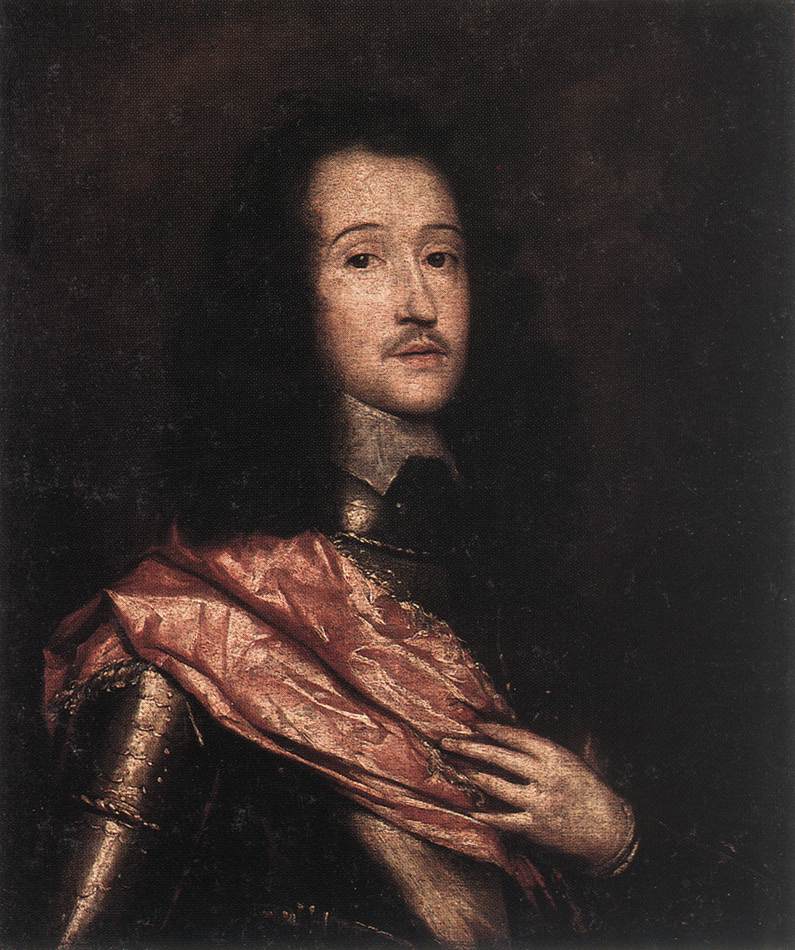 |
| Richard Lovelace |
The similarity between the two is their devotion to their country - to a cause greater than themselves. They devote their life to something grand, something important, and that's why their love stories are more interesting than Romeo and Juliet. In his poems, Lovelace expresses all his longing for his beloved, all his undying love and fidelity, but at the same time, confesses that what he is doing is more important than his own feelings towards her. Arturo is pretty much the same. And that's why he's amazing.
Thanks to I Puritani, I can't think about Lovelace without picturing the good-looking Juan Diego Florez who sings Arturo's aria, "A te, o cara" in the video below.
Subscribe to:
Posts (Atom)



 Posts
Posts