Great to see a lot of entries last month. It's actually lovely to see Marlowe and Lyly on the list as well. It seems like Macbeth won the vote for most-read Renaissance in this challenge.
March is more modern. You are free to choose anything after the English Renaissance. So Sheridan, Wilde, Shaw, and many others are very welcome. Don't be afraid to read outside of England. Beaumarchais, Hugo, Rostand, and the rest would be welcome as well.
Don't forget to share in the linky below.
Showing posts with label Play Event. Show all posts
Showing posts with label Play Event. Show all posts
Monday, 2 March 2015

Wednesday, 31 December 2014
PLAY ON! January - Ancient Plays
January is approaching. It's time to start our play reading challenge. The challenge for January is Ancient Plays.
When we say Ancient, it means anything before the printing press begun. So, Old Greeks and Romans are very welcome. Apart from those two obvious categories, if you happen to know Ancient plays from other parts of the world (Chinese or Japanese, for instance) they are welcome as well, provided they are written for plays, not epic or narrative poems.
The Greek loved to write trilogies. It was long before The Lord of the Rings or Hunger Games, but they just knew how to make a good show. So if you happen to challenge yourself with the whole 3 plays in Oresteia or Oedipus cycle, that would be awesome. Unfortunately, we don't have many nowadays, most have been lost through age and time.
I have posted a linky below for us to share with others our reviews of the plays that we read. Please insert the play author, play title, your name, and the title of your blog, with a link to your review. (e.g.: Sophocles - Oedipus Rex (Listra@Half-Filled Attic))
And, don't be shy to share your reading experience in social media, using the #PlayOn hashtag.
Let's Play!
When we say Ancient, it means anything before the printing press begun. So, Old Greeks and Romans are very welcome. Apart from those two obvious categories, if you happen to know Ancient plays from other parts of the world (Chinese or Japanese, for instance) they are welcome as well, provided they are written for plays, not epic or narrative poems.
The Greek loved to write trilogies. It was long before The Lord of the Rings or Hunger Games, but they just knew how to make a good show. So if you happen to challenge yourself with the whole 3 plays in Oresteia or Oedipus cycle, that would be awesome. Unfortunately, we don't have many nowadays, most have been lost through age and time.
I have posted a linky below for us to share with others our reviews of the plays that we read. Please insert the play author, play title, your name, and the title of your blog, with a link to your review. (e.g.: Sophocles - Oedipus Rex (Listra@Half-Filled Attic))
And, don't be shy to share your reading experience in social media, using the #PlayOn hashtag.
Let's Play!
Sunday, 31 August 2014
PLAY ON: Play Challenge in 2015
Those who frequently visit my little blog can no doubt observe my passion for plays. Plays are interesting in so many ways. So in the first quarter of next year, I'd like to invite everybody to join with me in this play event/challenge.

We want to keep the theme wide enough in order to allow everybody huge options. So I'll just split plays into four categories based on the period when they were written and assign each period to each month.
January: Ancient Plays, including Greek and Roman plays
February: Renaissance Plays, including Shakespeare and his contemporaries
March: Post-Renaissance Plays, anything post Renaissance is allowed. Wilde and Shaw are very welcome
April: Freebie Plays, if you find any particular playwright interesting during the 3 months, feel free to read another of his/her plays. Or if you want to experiment with other genre or other playwright, you are in.
So, please sign in using the linky below with your name and the name of your blog (e.g. Listra - Half-Filled Attic). I'd be thrilled by your participation.
So here are the rules:
- The challenge will run for four months, beginning from January 2015.
- Each month, there will be a monthly theme.
- A master post will be published shortly before the challenge begins.
- Participants are expected to read and post a review each month, and post it in the upcoming Master Post.
We want to keep the theme wide enough in order to allow everybody huge options. So I'll just split plays into four categories based on the period when they were written and assign each period to each month.
January: Ancient Plays, including Greek and Roman plays
February: Renaissance Plays, including Shakespeare and his contemporaries
March: Post-Renaissance Plays, anything post Renaissance is allowed. Wilde and Shaw are very welcome
April: Freebie Plays, if you find any particular playwright interesting during the 3 months, feel free to read another of his/her plays. Or if you want to experiment with other genre or other playwright, you are in.
So, please sign in using the linky below with your name and the name of your blog (e.g. Listra - Half-Filled Attic). I'd be thrilled by your participation.
Sunday, 1 December 2013
Let's Read Plays - Wrap-Up

I don't know if I still need to write a wrap-up considering that I have this post already. I want to do it anyway. Haha.
I have enjoyed the event immensely - it was good, and full of excitement. Sadly, though, I couldn't manage to fully participate in it, since my schedule became so madly chaotic by the end of the year. Anyway, here's what I did (unless mentioned, plays are by Will Shakespeare):
I also want to express my apalogy for not being able to finish the monthly meme for this challenge. Nor did I monthly participate in Character Thursday.
But trust me, if anyone holds similar event in the future, I'm in.
But trust me, if anyone holds similar event in the future, I'm in.
Thursday, 29 August 2013
Much Ado About Nothing: Basically A Lot of Fun

This play is sometimes
categorized not as a comedy, but as something called “problem
play.” The play involves two main threads of story, namely
Benedick/Beatrice match and Claudio/Hero love tale.
It all started when
Leonato and his family heard about the coming of Don Pedro, who had
just come back from war against his half-brother Don John. Don Pedro
forgave his brother and brought him also to Leonato, who received
them very well. In his war, Don Pedro was accompanied by his
courtiers and friends, Benedick and Claudio. Claudio, although young
and inexperienced, had don “in the likeness of a lamb, the feats of
a lion” and was given so much honour.
It turned out that
Claudio and Hero, Leonato's daughter shared a mutual love while there
was a “merry war” between Benedick and the disdainful Beatrice
(Leonato's niece). Both Benedick and Beatrice swore never to marry
and it seemed that they were serious about it. However, after quite a
major though funny argument between them, Don Pedro swore to be their
matchmaker, and asked Leonato, Hero and Claudio for assistance in
accomplishing his plans.
Don John had another
plan. He was determined to take his revenge upon Don Pedro and
Claudio. So after Borachio's advice, Don John and his men set a plan
to slander the young lady Hero and made as if she had an affair with
Borachio and thus unfit for marriage.
 |
| David Tennant as Benedick |
After several awkward
moments in Benedick/Beatirce relationship, the cancellation of
Claudio/Hero's marriage finally urged those two to confess their love
to each other – still in an awkward way. Beatrice forced Benedick
into breaking his friendship both with the Prince and Claudio and
even challenged “Mr. Lackbeard” to a duel.
But even though the
play is a problem play, well, it's still a comedy, so everything
ended up fine. How? I guess it's our privilege to check it ourselves.
This play is so much
more interesting on stage than on pages. Really. If Claudio and Hero
along with all the Don John I-am-bad drama give a little bit of
darkness to the play, once you see Benedick/Beatrice on stage,
everything becomes light and fun again. And who can miss the
watchmen's innocent folly? It's just so interesting.
There are so many
interesting things in the play that I love. The lines and phrases are
truly witty and smart. Some phrases like “better better'd
expectations” and “he's all mirth” and the menacing “eat his
heart in the market-place” just stick in my mind. (I actually told
some of my friends about the heart-eating in the market-place part
and now they remember Shakespeare by that phrase. My bad.) Overall,
this comedy is so good that it has become maybe my favourite
Shakespeare comedy of fun.
Wednesday, 31 July 2013
School for Scandal: The Danger of Gossip
Like Marlowe's Dido,
this is also my very first play by Sheridan. I first heard it
mentioned (and played) in The Duchess film. Later on I found the book
in my university library (which has so many beautiful books with
nobody touching them) but felt reluctant to read it. For this month's
LRP, however, I feel like reading it very much. So I brought it home
last Thursday and started reading it this morning.
It's everything but
serious.
School for Scandal
portrays the life of England upper class where people talk about
everything about everyone. It's all gossips and scandals (therefore
the title). What also interesting is how the play shows gossip on the
make.
CRABTREE: Why, one evening, at Mrs. Ponto’s assembly, the conversation happened to turn on the breeding Nova Scotia sheep in this country. Says a young lady in company, “I have known instances of it; for Miss Letitia Piper, a first cousin of mine, had a Nova Scotia sheep that produced her twins.” “What!” cries the Lady Dowager Dundizzy (who you know is as deaf as a post), “has Miss Piper had twins?” This mistake, as you may imagine, threw the whole company into a fit of laughter. However, ’twas the next morning everywhere reported, and in a few days believed by the whole town, that Miss Letitia Piper had actually been brought to bed of a fine boy and a girl: and in less than a week there were some people who could name the father, and the farm-house where the babies were put to nurse.
Isn't it crazy how such
baseless slander should come out of nothing but mistake? The play is
actually an amazing instrument to show hoe ridiculous but dangerous
gossips are. Sir Peter, one of the few characters in this play who
hate gossip and scandal, expresses himself beautifully.
SIR PETER: Ah! many a wretch has rid on a hurdle who has done less mischief than these utterers of forged tales, coiners of scandal, and clippers of reputation.
Ruining people's
reputation is as bad as killing them. There's a proverb in my country
that says 'slander is even worse than murder'. Sir Peter even would
love to pass a law that forbid gossiping, so that “no person should
be permitted to kill characters and run down reputations, but
qualified old maids and disappointed widows,” who have too much
envy and too little work to do.
And I haven't told you
even a jot of the main plot. Haha. Like most comedy, School for
Scandal's plot is hard to
explain but easy to understand when you read (or watch) it.
Monday, 22 July 2013
Dido, Queen of Carthage: My First Marlowe's Play

Around a month ago I
read the play, and found it to be very good indeed, even though I am
by no means well-acquainted with any Elizabethan play except
Shakespeare's. I chose the play Dido for no other reason than
my fondness of Greek and Roman myths and also Shakespeare's Hamlet.
In Hamlet there's a player
who recites “Aeneas' tale to Dido” about Priam's slaughter, and
such story I find in this play as well. So, now to the review.
The
play begins with Jupiter and Ganymede together on the stage. Jupiter
flirts with the young boy (yes, he's a boy) and promises him
everything he desires if he could only get his love. Then Venus
enters, complaining about the sufferings Aeneas must face. Jupiter
assures her that Aeneas will be fine. Venus then meets with her son
and leads him to Dido's place, who receives him with all honour and
affection. But that's when the problem begins.
Venus
has Cupid disguised as Ascanius. He then pricks Dido's heart with his
arrow, which makes her suddenly and madly in love with Aeneas. She
persuades Aeneas to cancel his plan to go to Italy and become the
King of Carthage instead. Nevertheless, the gods have decided that
Aeneas must go, leaving Dido in despair. The queen kills herself in
fire, followed by her lover, Iarbas, and his lover, Anna.
For
those who have read Aeneid, none of these are new. The story had been
a legend by the time the play was written anyway. People expected
these things to happen on stage. However, Marlowe, being a great poet
and playwright, was able to rephrase the story into beautiful lines.
There are times when his words remind me so much of Shakespeare. They
lived in the same period and I think Shakespeare took a lot of lesson
from Marlowe's plays.
The part I love best from the play, maybe, is as Hamlet told the player, "Aeneas tale to Dido" about the fall of Troy. It's so...Greek, or I might say, Roman. I don't know. But it reminds me of my experience reading the same sort of thing in Odyssey, when the main character must tell his story to his listeners.
 |
Aeneas tells Dido about
the fall of Troy by Pierre-Narcisse Guérin
|
Having
said that I like the play, I want to quote what my friend said when I
told him that I was reading it. He said, “I still prefer
Shakespeare anyway.” I think I still love the Old Bill better than
any playwright anyway.
Sunday, 7 July 2013
LRP July Meme: Let's Talk about Playwrights
“The play's the thing.” - Hamlet, Shakespeare

This month's theme is
'other author', which means we will read neither Shakespeare nor
Wilde, and maybe not Greek either. So, one question: “Who is your
playwright this month?”
Not everybody knows
playwrights. I have a friend who didn't even know who Shakespeare
was, not mentioning other less-known playwrights. To enhance our
knowledge in this matter, this month's meme is simple: Tell us about
your chosen playwright. Anything can go. You can give a summary of
his life, is works, or, if you prefer, just what you like and dislike
from him.
As usual, guiding
questions. Again, this is NOT necessary. As I sadi before, anything
can go.
- Give us his brief biography.
- Give us a tour through his plays.
- What you like or dislike from the playwright.
- Compare him with other playwrights you know.
Voila! Let's have fun
with our chosen playwright this month. Oh, and if you happen to read
more than 1 playwrights this month, feel free to share more than one
also in the meme. Have a nice reading!
Saturday, 22 June 2013
The Importance of Being Earnest: Funny, but Absolutely not Important

The
plot involves a guy named Jack who leads a double life. In London, he
is known as Ernest Worthing, while in the country he is John 'Jack'
Worthing who has a brother
named Ernest. His friend, Algernon, also leads a double life, which
Jack calls “Bunburying,” because he makes up an invalid person
named Bunbury to get away from things. Jack is in love with Algy's
cousin, Gwendolen, and she is too, in love with him – or to put it
more plainly, his name. Algy, curious to know his friend's life in
the country, goes there as Ernest – Jack's brother. There he meets
Cecily, a young girl under Jack's guardianship. He likes her, and she
likes him as well – as Ernest. To make things more complicated,
Gwen goes there as well to meet his fiance, Ernest. The rest is for
you to read.
The
play is witty and funny, but if you're looking for serious stuff or
moral lesson, the book is not to be recommended. It mostly contains
Wilde's smart sarcastic remarks on life and society. The plot itself
is not so different from normal Shakespearean comedy, and therefore,
enjoyable. Better still, it contains nothing inappropriate. It's
perfectly funny, and not at all serious.
Having
praised it so much, I still don't understand why I don't give it a
good score on Goodreads. I only give 3 stars for it. Maybe it's
because the language is so so simple and straightforward, not at all
romantic or beautiful. Even though I don't really like it, it's still
a worthy book to read.
Sunday, 2 June 2013
Othello: “One that loved not wisely but too well”

I love Othello. He's an amazing man, full with high spirits and lots of sufferings. I also love Desdemona. She's a fine, sweet lady, who, behind her calm and solemn manner hides courageous heart. I hate Iago. That's it.
Othello is one of the most well-known of Will Shakespeare's plays. It tells a story about Othello, a Moor who served as a military general in Venice. He married a noble and virtuous girl, Desdemona, much against her father's will. Nevertheless, Desdemona loved him so much and was very eager to marry him.
Then there was Iago, a subordinate of Othello, who, out of envy towards Cassio, and anger towards Othello, slandered Desdemona by telling Othello that she had an affair with Cassio, another Othello's subordinate – leading to disaster. Without him, the play would end like a fairytale.

I must confess that I read this play quite hastily in the middle, not because I didn't have much time, but rather because I couldn't stand the conflict. For me, Iago's slander is most wicked and unfair. I pity Othello, for as Lear, he was 'more sinned against than sinning' kind of hero.
Apart from all these personal ramblings, I need to underline also how Othello reflects people's view on non-Europeans in Shakespeare's era. Desdemona's father, for example, loathed to marry her to Othello, just because he was a Moor. Few, though, would share the same view as the Duke, who was so kind to Othello, treated him with respect and appreciation. Maybe that's why, in this world of prejudice and injustice, the play stays popular despite its age.
Thursday, 2 May 2013
Let’s Read Plays: Check-In #2
Check-in! Yay! This is one of the most interesting reading events I'm participating in this year, although I must confess that I have been more than busy lately, with a lot of things distracting my mind (among which Shakespeare, my thesis, and my own capricious self are the main reasons). So, while idly (which I should not be) waiting in the library, being sad and romantic after watching Giselle on YouTube, I decide to write the check-in. (I know, I haven't written a check-in for my own event, but whatever.)
How have your Let’s Read Plays been during these six months, still exciting, or a bit boring? Did you read all the monthly themes, or did you miss several ones?
AMAZING! I have always loved Shakespeare, so it becomes more like an entertainment than a burden to me. I LOVE reading those plays. I read all the monthly themes, luckily in time. I even managed to read 2 tragedies in the first month of the challenge. And it's still as exciting as ever. I expect to read more in months to come.
What has been your favorite, or your failure (if any)?
JC is a re-read, and Richard III is too dark. I'd say Antony and Cleopatra is my favourite tragedy this far, and LLL wins the comedy category.
Which play are you expecting the most in the next six months?
Othello. I must read it one day anyway, so why not now? I am also curious about Wilde, since I've never touched any of his plays yet. I still don't know about the "free months." Maybe Sheridan's School for Scandal or Shaw's Pygmalion, or both.
Have you been participated in Let’s Read Plays memes? Are you excited to participate more in the future?
Yeah! I must admit that the history stuff quite drained my brain, but the rest were quite enjoyable. I didn't participate in the costume theme (shame on me), but I try my best not to miss anything anymore. As for the Character Thursday, of course I enjoy it. What's more amazing than fangilring or ranting about a character you love or hate? But it's hard for me to do it each month. I am not good at describing people, I guess.
So, there. Hope you enjoy the event as much as I do. :D
Thursday, 18 April 2013
Love's Labor's Lost: Cliffhanger, Anyone?
Love's Labor's Lost
is one of the comedy plays of
Shakespeare, and one of the earliest too. I read this as part of
Let's Read Plays event, and have been enjoying it so much. But it's
also different from other comedies I've read.
 |
| David Tennant as Berowne |
First
of all, the synopsis. Ferdinand, the king of Navarre, proposed an
oath that he and his friends would dedicate 3 years for studying,
during which time no woman should come to the court. Two of the
king's friends, Longaville and Dumaine, hastily agreed and signed the
pact, while Berowne stated that it wouldn't be wise. He also reminded
the king that he should meet a lady anyway, namely, the daughter of
the king of France. The king amended the pact, but still insisted
upon the carrying out of it. Berowne, being a good friend to the
king, signed it anyway. But he also added, “although I seem so
loath,/I am the last that will last keep his oath.”
Well,
the day after, the Princess of France came with her three
ladies-in-waiting. The king paid her a visit (with his three friends
too) and talked a bit about the matter of state. Just that? Well, it
might seem so, but the friends of the king closed the meeting with
inquiring Boyet (the Princess' man) about the who the ladies were.
Not
long after, Berowne railed about his love for Rosaline, one of the
Princess' ladies-in-waiting, and then he overheard how actually all
of them had broken their oath (including the king, who was in love
with the princess). Haha. It's honestly the funniest scene in the
play. They concluded that it was wrong to propose such oath at the
first place, and they would try to win the hands of their ladies.
Now,
this play is different from Shakespeare's typical comedy – it
doesn't end with a marriage (or some marriages). Also, there are
Latin verses scattered here and there, making the play even less
enjoyable for a commoner like myself. Some say that this play was not
written for common people after all. It was for scholars or so.
One more thing. The end of this play is actually a cliffhanger. There's a lost play of Shakespeare entitled Love's Labor's Won, suspected to be the sequel of this play. It makes this play somewhat 'not final'. Any odea what Shakespeare might have written in the lost play? No, it's not like how it is in Doctor Who.
One more thing. The end of this play is actually a cliffhanger. There's a lost play of Shakespeare entitled Love's Labor's Won, suspected to be the sequel of this play. It makes this play somewhat 'not final'. Any odea what Shakespeare might have written in the lost play? No, it's not like how it is in Doctor Who.
Monday, 11 March 2013
The Trojan Women: Mother and Daughters

The Trojan Women by
Euripides opens with a meeting between Poseidon and Athena, two
deities that agree to bring calamities upon Troy conquerors, who are
so sure about themselves. The story then moves to the Trojan women,
namely, Hecuba the queen and her daughters and daughter-in-law.
Hecuba
mourned the death of her husband and sons, then inquired what would
happen to her and her daughters. Talthybius, the messenger, informed
her that Cassandra would be Agamemnon's wife, Andromache would be
Neoptolemus' (also known as Phyrrus) wife, Polyxena would serve at
Achiles' tomb, and she would be Odysseus' slave.
Then
Cassandra came, bearing a prophecy of Agamemnon's death and riot in
his family, she also prophesied that Odyssus would face so many
troubles on his way home and that Hecuba herself would die in Troy
(but due to her curse, of course no one believed her).
Next
Andromache came, with her son Astyanax. She told Hecuba that Polyxena
was dead. She wailed her fate of becoming Phyrrus' wife, fearing that
by becoming another's she betrayed the memory of her husband, Hector.
Hecuba encouraged her to continue her life. Talthybis came back,
telling them that Astyanax should be put to death. Andromache
complied with a heavy heart.
After
that, Menelaus came, taking Helen back with him to Sparta. He
promised Hecuba that he would kill her, but we know better.
Overall,
this is perhaps the most touching Greek play I've ever laid my hands
on. The emotion expressed, especially by Hecuba and Andromache,
touches me deeply. It might be because I myself am a woman, I can
relate more to these ladies than to the heroes (fond as I am of
them). Perhpas my favourite part is Andromache's words when she
bewails her fate and weeps for Hector, whilst remembering that she
would soon be Phyrrus' wife.
“And if I set aside my love for Hector, and ope my heart to this new lord, I shall appear a traitress to the dead, while, if I hate him, I shall incur my master's displeasure. And yet they say a single night removes a woman's dislike for her husband; nay, I do hate the woman who, when she hath lost her former lord, transfers her love by marrying another. Not e'en the horse, if from his fellow torn, will cheerfully draw the yoke; and yet the brutes have neither speech nor sense to help them, and are by nature man's inferiors. O Hector mine! in thee I found a husband amply dowered with wisdom, noble birth and fortune, a brave man and a mighty; whilst thou didst take me from my father's house a spotless bride, thyself the first to make this maiden wife. But now death hath claimed thee, and I to Hellas am soon to sail, a captive doomed to wear the yoke of slavery.”
I'd
give this play a great applause, could I watch it on stage.
Friday, 1 March 2013
LRP March Meme: What's so Greek about It?
“But for mine own part, it was Greek to me” - Shakespeare, Julius Caesar.
Another
relief from Shakespeare. With so many Shakespeares we read in this
event, maybe we will start speaking Shakespeare at the end of
October. Well, at least the insults come in handy. The quote above is
just one example.
Now,
plays have been one form of entertainment since long before
Shakespeare. So this month we will go backwards, far before the Bard,
long before Richard III and Julius Caesar. We will read the Greek
plays and have fun with them.
One
problem with Greek plays: they are not Shakespeare. That's the point.
What's the point of reading Greek if it still smells Shakespeare? Yet
their being Greek makes quite a lot of differences. That's what this
month's meme is all about. We will discuss the differences of Greek
plays with the ones we have been reading these last few months.
As
usual, here are some helping questions:
- What do you think is so exclusive to Greek plays which we don't find in other kinds of plays?
- What do you like (or hate) from them?
- How did they do it long ago? What's the most interesting in its culture?
There.
Please leave a link to your post below. I'd be happy to read what you
think about Greek plays. Have fun.
Tuesday, 26 February 2013
Richard III: Fiction vs. Reality
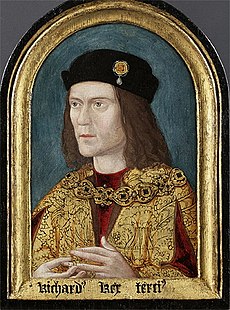
So, to be able to say
something about Richard III, that is, to be able to distinguish the
real Richard III with Shakespeare's interpretation of the character,
I've done a little research upon the matter. I believe that
Shakepeare, although so great in his command of words, was not a
historian. Therefore, his historical plays should not be entirely
trusted as a guideline in any historical research.
Actually,
prior to reading Richard III, some years ago, I read a few chapters
of a book by Glenn Pierce, entitled King's Ransom
in a library sort-of, but the book was gone when I came back some
time later to continue my reading. In that book, Richard is described
as a more modest and kind human being rather than a wicked ambitious
demon. Thus these few last days I tried to find what other people say
about Richard III.
Firstly,
his looks. While Shakespeare described him as a hunchback, and
practically a monster in appearance, such thing is not likely the
case. In Richard's time, people who went to war needed to wear heavy
armours and weapons. It is very unlikely that a man with hunchback
could actually go to war, on a horse, and kill his opponents
dexterously. The newly found remains believed to be the king shows
that Richard III was not a hunchback, although he had scoliosis. It's
in harmony with Rous and More's report that one of the king's
shoulder is higher than the other. [1][2]
 |
| The newly-found Richard III remains |
Now,
about the murders that Richard III committed in Shakespeare's story.
Scholars are still debating whether Richard really committed all of
those murders. It's actually interesting to read what the Richard III
Society has to say about it.[3] It's not so much to conclude that
Shakespeare's description of the king's homicidal character is too
much dramatisation with less historical accuracy.
On
the contrary, many people in Richard's era described him as a brave
soldier, a good member of the family and also a good king. Instead of
being a tyrant, he encouraged justice in all his region.[4][5]
Why,
then, did Shakespeare write such a play, and how could such a play
labelled as 'historical'?
Shakespeare
complied with the general belief of his era that deformity in flesh
reflects the deformity in moral qualities as well. Moreover,
Shakespeare lived under the reign of a Tudor sovereign, thus it would
be easier for him to glorify the present dynasty rather than to give
balanced view of the former one.
Another
reason. There are writings available in Shakespeare's era which might
be biased and not credible. Among those are writings by Polydore
Vergil and Sir Thomas More. Shakespeare was also believed to have
taken his history from the Chronicles,
which quality is varied when it comes to accuracy. [1]
Whether
Richard to some extent had really been a bad tyrant, or whether he
had been most unjustly accused of committing terrible things he had
never done, most of us would agree that Shakespeare's play Richard
III remains a masterpiece –
even those supporting Richard wouldn't deny that. But this play
reminds us all that we have to carefully choose between fact and
fiction and make sure of everything before believing it entirely.
That's
all I think. I am no expert in this matter, I'm sorry, but it has
been fun to dig deeper into history this time. I encourage you all to
read these links below, in order to see Richard III from another
point of view.
[2]http://articles.washingtonpost.com/2013-02-05/world/36758723_1_dna-tests-richard-iii-curved-spine
[3]Richard III Society. http://www.richardiii.net/2_5_0_riii_controversy.php#crimes
[5]Richard III Society. http://www.richardiii.net/2_3_0_riii_leadership.php#parliament
Monday, 25 February 2013
Richard III: Killing, Killing and Little Else

Don't be angry with me,
Shakespeare lovers. (Do we have a word for Shakespeare's fans, you
know, like Sherlockians for Sherlock Holmes?) This is the first
Shakespearian History that I truly read from enter to exeunt. But I
cannot say that it's as entertaining as As You Like It
(and I doubt it's supposed to), or as intriguing as Hamlet,
or even its kin, Julius Caesar.
Richard III
focuses on the events leading to Richard III's enthronement, complete
with the killing of Clarence, the king, and later on, the two
princes. Then the story goes to the military campaign of Richmond
which later succeeded the crown.
In
the play, Richard is depicted as cruel, sly, ugly, and wicked. He has
been very detestable even since the start of the play. The more
annoying he is, the more I don't believe the story. I mean, nobody
could be that cruel. I wonder if the play could be categorized as
“historical fiction” instead of “historical play.” I think I
need to do further research before I determine which story I should
trust and which I should distrust.
Still,
the play is a good thing. Well, of course it is, Shakespeare wrote
it. (Perhaps I am a little bit biased when it comes to the Bard.) My
favourite scene, is perhaps, the ghosts coming to Richard and
Richmond's tent, threatening and cursing the one and blessing the
other. Similar scene appears in Julius Caesar, but the ghost comes to
Brutus only. In this play, however, the ghosts come to both parties
and make the contrast between Richard and Richmond even stronger.
That's
all I think. I can't wait to do some little research and post it as a
part of the #LRP event. You shall hear more Richard from me. ;)
Sunday, 6 January 2013
Cyrano de Bergerac: Maybe the Love is Not At All Unrequited

It's a pity I neither
speak nor read French. Had I known the language better, had I the
ability to read it in the language it's originally written, perhaps I
could have enjoyed it better.
It doesn't mean that I
didn't enjoy it – I did. But the play is still a play, and it's
hard to translate a play no matter what language you want to
translate it into. I'm just hoping I don't miss much.
Cyrano de Bergerac is a
soldier, duelist, and poet. He's brave and skilled in words as well
as in sword. He somewhat reminds me of D'Artagnan, with the same
level of obstinacy and playfulness. He enters the stage dramatically,
starting only as a voice that demands one actor to descend. His
adventure doesn't end there. He then engages in a duel with Valvert,
and wins the game while composing a ballad. Hmm, charming. But the
great amazing thing is him fighting five scores of men to save his
friend, Lignière.
But that's not the main
plot. Cyrano is in love with his cousin, Roxane, a charming and
beautiful lady. But he has a problem. Cyrano thinks that he is ugly,
with an enormous nose on his face. He sure has the skill with words,
but he doesn't feel confident with his looks.
“Look well at me--then tell me, with what hope This vile protuberance can inspire my heart! I do not lull me with illusions--yet At times I'm weak: in evening hours dim I enter some fair pleasance, perfumed sweet; With my poor ugly devil of a nose I scent spring's essence--in the silver rays I see some knight--a lady on his arm, And think 'To saunter thus 'neath the moonshine, I were fain to have my lady, too, beside!' Thought soars to ecstasy. . .O sudden fall! --The shadow of my profile on the wall!”
Meanwhile, Roxane
confesses to him that she's in love with a handsome soldier,
Christian. Christian is exactly Cyrano's opposite – good-looking
but not a good speaker.
Instead of begrudging
Roxane's love or challenging Christian in a duel, Cyrano chooses to
join forces with him. Cyrano expresses his love in words to Roxane
while making her believe that it's actually Christian.
“Roxane shall never have a disillusion! Say, wilt thou that we woo her, double-handed? Wilt thou that we two woo her, both together? Feel'st thou, passing from my leather doublet, Through thy laced doublet, all my soul inspiring?...Will you complete me, and let me complete you? You march victorious,--I go in your shadow; Let me be wit for you, be you my beauty!”
Well, Cyrano might be
wrong. Perhaps it's not always the outward look that matters. Perhaps
he's not that ugly at all. Perhaps Love is sometimes blind. And
perhaps, his love is not at all unrequited. But perhaps, Fate uses
the phrase “too late” too much.
I like the play, though
I prefer to read it in its original language. I like the hero too.
Cyrano reminds me of the Three Musketeers plus D'Artagnan. There are
duels, battle, valour, honour, fun, and a lot of nice things in the
play. Although the play is not a comedy, it's not dark as well.
Historical Facts and Background:
Historical Facts and Background:
- Cyrano de Bergerac was a real person, though the love story is entirely fictional
- The play is set in 17th Century France, and the battle involved is a part of Thirty Years' War between France and Spain.
Thursday, 20 December 2012
The Two Gentlemen of Verona: The Main Plot Doesn't Really Matter

Valentine and Proteus
are two young gentlemen living in the Italian city of Verona (the
same city where Romeo and Juliet lived). They are both close
and loyal friends – at first. Proteus is in love with a girl named
Julia who lives in town. Meanwhile, Valentine goes away to Milan to
serve the duke there, and fall in love with his daughter, Silvia.
Being sent by his
father, Proteus finds himself with his friend again in Milan. There
the young man falls in love with Silvia too. He devises a plan to get
rid of his competitors: Valentine, and another man named Thurio.
Proteus tells the Duke that Valentine is planning to take Silvia
away, and the poor man is banished shortly after.
 |
| Valentine Rescues Silvia in 'The Two Gentlemen of Verona' by Angelica Kaufmann |
Silvia is not impressed. She abhors Proteus' betrayal and infidelity, and she openly says so to both Proteus and his new servant, Sebastian. Wait, why does Sebastian look very much like Julia? Silvia then goes away to Mantua to look for her lover in his exile. Proteus goes after her and tries to rape her. But Valentine interferes.
At the end, everyone's
happy. That's why we call it a comedy.
But as I said before,
I'm much more impressed by the witty comical scenes featuring the two
clowns, Speed and Launce. Here are some of them:
SPEED. How now, Signior Launce! What news with your mastership?
LAUNCE. With my master's ship? Why, it is at sea.
SPEED. Well, your old vice still: mistake the word. What news, then, in your paper?
LAUNCE. The black'st news that ever thou heard'st.
SPEED. Why, man? how black?
LAUNCE. Why, as black as ink.
And more.
SPEED. What an ass art thou! I understand thee not.
LAUNCE. What a block art thou that thou canst not! My staff understands me.
SPEED. What thou say'st?
LAUNCE. Ay, and what I do too; look thee, I'll but lean, and my staff understands me.
SPEED. It stands under thee, indeed.
LAUNCE. Why, stand-under and under-stand is all one.
Well, I must say that
this play doesn't really amuse me as much as other comedies, but it's
pretty nice. I think they should make the No Fear Shakespeare version
to make it easier to read, though. So many puns have lost their
meanings nowadays, that it's so difficult to really understand them
without help.
Saturday, 1 December 2012
LRP December Meme: Costume
“Not out of your apparel, and yet out of your suit. “ - Rosalind, As You Like It
Did you like last month's reading? Was it depressing to read so many people die? Let's relieve ourselves then. This month, we will laugh!
This
month's reading theme is Shakespeare's Comedy. When we talk about
plays, we will talk no doubt about stage productions, and of course,
about the costumes. Costumes are important in Shakespeare's plays
stage adaptations. Some try to make Shakespeare stays Shakespeare,
and put vintage clothes on their casts. The others want to make
Shakespeare looks modern, and change the costumes into modern ones.
This
month, you may pick a play or a character, and feature the costumes
you like/dislike. Here are some ideas:
- Pick a character, and talk about his/her costumes in your favourite stage/film adaptation.
- Pick a character, and compare costumes
- Pick a play, and compare productions costumes
- Pick a play, and say what you like/dislike about the costumes
- Pick a character or a play, and say what costume you think would fit most.
Things
above are just ideas. You can of course improvise. Just have fun with
costumes. You can even feature yourself in somebody else's costume
(Rosalind or Portia, maybe?).
The
linky will open the whole month. I'm looking forward to your entries.
Thursday, 29 November 2012
Antony and Cleopatra: If This be Love Indeed...

Antony and Cleopatra's
main theme is perhaps love. The death of Antony and his lover the
queen of Egypt somehow resembles the typical love tragedy in
Shakespeare and older stories, such as Romeo and Juliet, Pyramus and
Thisbe, Othello, etc. But for me Antony and Cleopatra has its own
uniqueness.
One of them is of
course, the political theme in the play. The political theme is so
intense that it blurs the theme of love at times. For example,
Antony's marriage to Octavia is actually quite a shocking choice from
the 'love' point of view, especially after his promise to Cleopatra.
But his political motive prevails over his emotional feeling, and he
chooses that path to strengthen his position in Rome. Cleopatra
forgives Antony anyway.
The ups and downs of
their relationship is also unique. They fight, and then they love
again, and fight again, none of them loves better than the other.
Their love is sometimes selfish, sometimes stupid, and it enriches
the plot of the play.
I don't know if I will
read the play again, given my dislike to tragedies (with few
exceptions), but for me the play is entertaining enough. Here below
is the list of my act-by-act review. Please enjoy.
Subscribe to:
Posts (Atom)


 Posts
Posts